
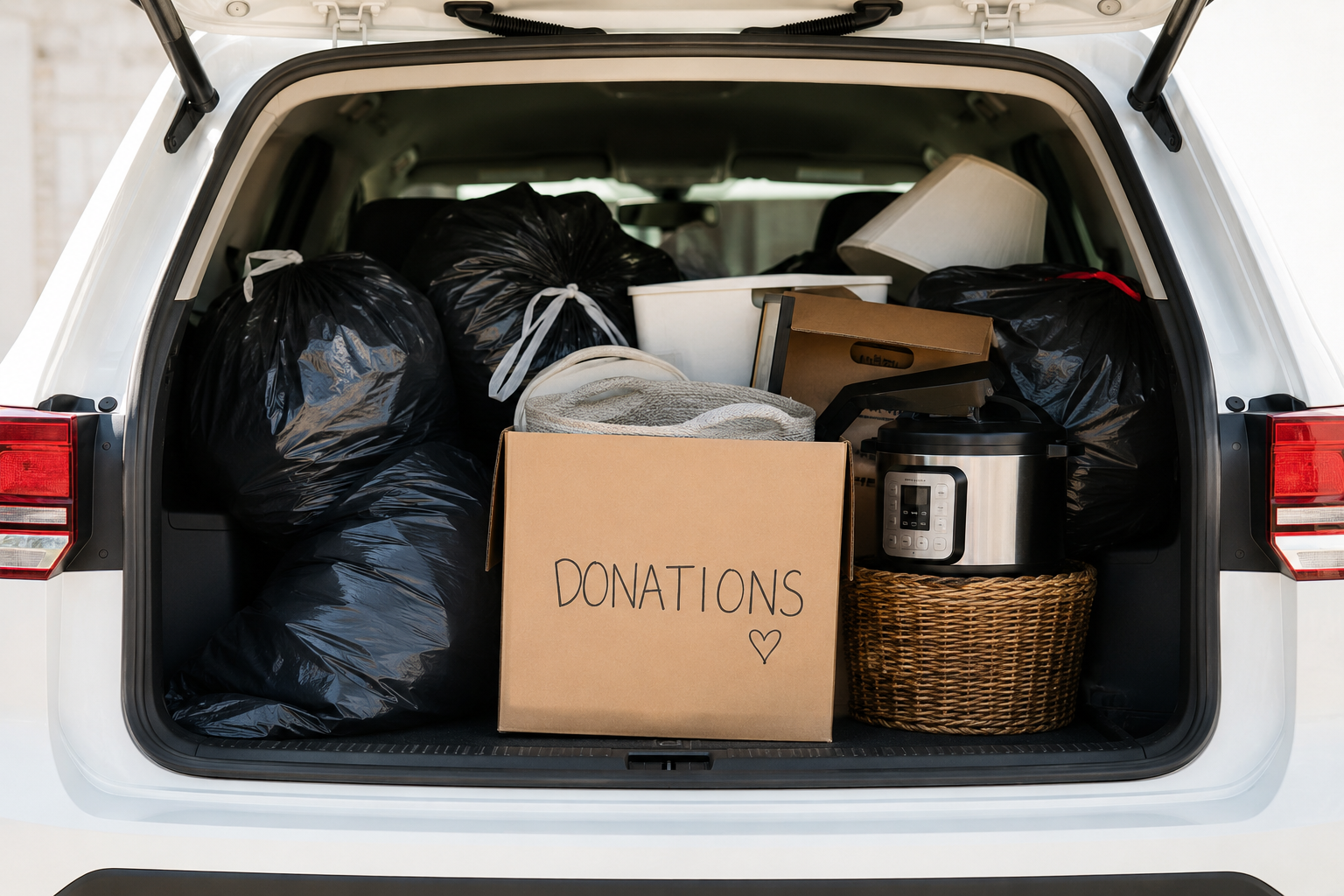
Where to Donate, Sell & Recycle Household Items in the Twin Cities
Decluttering is easier when you know where everything can go.
Whether you're organizing one closet or your entire home, this guide will help you decide what to sell, donate, or recycle—and where to take it throughout Maple Grove, the West Metro, and the Twin Cities.
From local donation centers and recycling resources to practical tips I've learned through organizing projects, my goal is to help you let go of things with confidence—and keep them out of the landfill whenever possible.
Before You Donate
A little preparation can make donating easier for you—and more helpful for the organizations receiving your items.
Before loading up your car, take a few minutes to run through this checklist.
✔ Check pockets, drawers, and bags for cash, gift cards, jewelry, keys, and other personal items.
✔ Donate clean, gently used items that someone else can enjoy right away.
✔ Throw away broken, heavily stained, or unusable items. Donation centers can't accept everything, and unusable items often become an added expense for them.
✔ Remove personal information from electronics and shred sensitive paperwork before recycling or donating.
✔ Group similar items together to make unloading and sorting easier.
✔ Pack donations in reusable bags or sturdy boxes whenever possible.
✔ Check the organization's current donation guidelines before making the trip, as accepted items and hours can change.
Sell, Donate, or Recycle?
Not everything belongs in a donation bin. Before loading up your car, take a minute to decide the best next home for your items.
Sell
If an item is in excellent condition and has meaningful resale value, selling it may be worth the extra effort.
Items commonly worth selling:
Furniture
Baby gear
Brand-name clothing
Electronics
Sporting equipment
Donate
If your goal is to clear the clutter quickly, donating is often the best option. Most everyday household items, clothing, toys, books, and furniture in good condition can be donated and enjoyed by someone else.
Don't overlook local Buy Nothing Facebook groups. They're a great option for passing along useful items directly to neighbors, especially things that may not be worth selling.
Great candidates include:
Home décor
Kitchen items
Toys
Craft supplies
Moving boxes
Seasonal décor
Plants
Wrapping paper, tissue paper, and gift bags
Recycle
Many items that can't be donated can still be recycled responsibly, helping keep usable materials out of the landfill.
Sell
Selling can be a great option for items with higher resale value, but it also requires the most time and effort. Before listing an item, ask yourself if the money you'll make is worth photographing it, creating a listing, answering messages, and coordinating pickup.
-
Best for
Furniture
Baby gear
Sporting equipment
Home décor
Higher-value household items
Why I recommend it
Facebook Marketplace is my go-to for selling larger items locally. Pricing items competitively and including clear photos will usually lead to a quicker sale.
-
Where to Sell
Once Upon A Child
Best for
Children's clothing
Shoes
Baby gear
Toys
Books
Why I recommend it
A quick and convenient way to sell children's items before donating what they don't purchase.
-
Where to Sell
Style Encore
Plato's Closet
Local consignment shops
Best for
Brand-name clothing
Shoes
Handbags
Accessories
Why I recommend it
If your clothing is in excellent condition and still in style, these stores can be a great option before donating. They all buy slightly different brands and styles, so it's worth checking what each location is currently accepting.
-
Where to Sell
Play It Again Sports
Best for
Bikes
Team sports equipment
Fitness equipment
Golf clubs
Outdoor recreation gear
Why I recommend it
A great option for quality sporting equipment that's ready for its next owner.
Tip: Give yourself a deadline. If an item hasn't sold after 2 weeks, lower the price once. If it still doesn't sell, donate it and enjoy the reclaimed space.

Donate
Donating is one of the easiest ways to clear clutter while helping others in your community. Before making the trip, check that your items are clean, gently used, and in working condition, and always review the organization's current accepted items.
-
CROSS Services
Best for
Clothing & shoes
Household goods
Linens
Baby & kids' items
Kitchen items
Why I recommend it
One of my favorite places to donate because your items stay local and directly support families in our community.
-
Goodwill
Best for
Clothing & shoes
Household goods
Home décor
Books
Toys
Kitchen items
Why I recommend it
With convenient locations throughout the Twin Cities, Goodwill is an easy stop when you're already out running errands.
-
Vietnam Veterans of America (VVA) and
Epilepsy Foundation MinnesotaBest for
Clothing
Shoes
Household textiles
Small household items
Why I recommend it
If you have several bags or boxes to donate, free home pickup is a huge time saver. After your first pickup, they'll often notify you when they're collecting in your area again.
Vietnam Veterans of America →
Epilepsy Foundation Minnesota → -
Habitat for Humanity ReStore
Best for
Furniture
Cabinets
Lighting
Doors
Building materials
Home improvement items
Why I recommend it
A great option for furniture and leftover renovation materials that still have plenty of life left.
Bridging
Best for
Furniture
Home furnishings
Why I recommend it
A wonderful organization that helps furnish homes for individuals and families transitioning into stable housing.
-
Schools & Libraries
Best for
Children's books
Classroom books
Unused art supplies
Craft supplies
Educational games (where accepted)
Why I recommend it
Schools and libraries may be able to put these items to good use instead of sending them to a donation center. Be sure to contact them first to see what they're currently accepting.
-
Best for
Pet beds
Pet crates
Leashes & collars
Unopened pet food
Pet toys
Blankets & towels
Stuffed animals
Why I recommend it
Many shelters welcome donations that help care for animals while they wait for their forever homes. Stuffed animals are often used for comfort and enrichment, and blankets and towels are always appreciated.
-
Best for
Home décor
Kitchen items
Toys
Craft supplies
Plants
Moving boxes
Seasonal décor
Wrapping paper, tissue paper & gift bags
Hard-to-donate everyday household items
Why I recommend it
Buy Nothing groups are a great way to pass useful items directly to neighbors in your community. They're often the perfect solution for things that aren't worth selling but still have plenty of life left.
Tip: Keep a donation bin or basket near the door to your garage. When it fills up, load it into your car and plan a donation drop-off within the next day or two.
Recycle
Not everything belongs in the trash. Many items that can't be donated can still be recycled responsibly, helping keep usable materials out of the landfill.
-
Trashie
Best forWorn clothing
Shoes
Socks
Bedding & linens
Stuffed toys
Small toys
Select electronics (see current accepted items)
Why I recommend it
Trashie is one of my favorite options for items that are no longer suitable for donation. Instead of ending up in a landfill, many items can be recycled or repurposed through their Take Back Bag program.
-
Device Pitstop
Best for
Computers
Laptops
Phones
Tablets
Electronics
Data destruction
Why I recommend it
A great local option for responsibly recycling electronics, especially if you have older devices collecting dust.
-
Best for
Electronics
Cardboard
Household recycling
Appliances
Scrap metal
Household hazardous waste
Why I recommend it
Hennepin County accepts a wide variety of items that don't belong in your curbside recycling bin, making it one of the most useful recycling resources in the Twin Cities.
-
Target
Best for
Plastic shopping bags
Plastic film
Rechargeable batteries
Small Electronics
Car seats (during trade-in events)
Why I recommend it
Many people don't realize Target offers several convenient recycling programs. It's an easy stop if you're already running errands.
-
Best for
Plastic film
Light bulbs
Batteries
Threads & textiles
Small electronics
Hard-to-recycle household items
Why I recommend it
Ridwell helps recycle everyday items that are difficult to recycle through traditional curbside programs. If you prefer a convenient, ongoing recycling solution, it's worth looking into.
-
Best for
Prescription glasses
Reading glasses
Sunglasses
Why I recommend it
Many local eye care clinics accept used eyeglasses to help provide vision care to people in need. Contact your local eye doctor to see if they participate.
-
Best for
Expired medications
Unused prescriptions
Why I recommend it
Many Hy-Vee and CVS pharmacies, along with local police departments, offer secure medication drop boxes for safe disposal.
Still Not Sure?
When in doubt, check the organization's accepted items before making the trip. Donation and recycling guidelines change over time, and a quick check can save you an extra stop.
Tip: Watch for community recycling and paper shredding events throughout the year. They're a great opportunity to safely dispose of sensitive documents and recycle items that aren't accepted through regular collection programs.
Ready to Declutter?
Knowing where to take your donations is only part of the process. If you're ready to clear the clutter but aren't sure where to start, I'd love to help.
Together, we'll simplify your space, create organizing systems that work for everyday life, and help you confidently let go of what you no longer need.